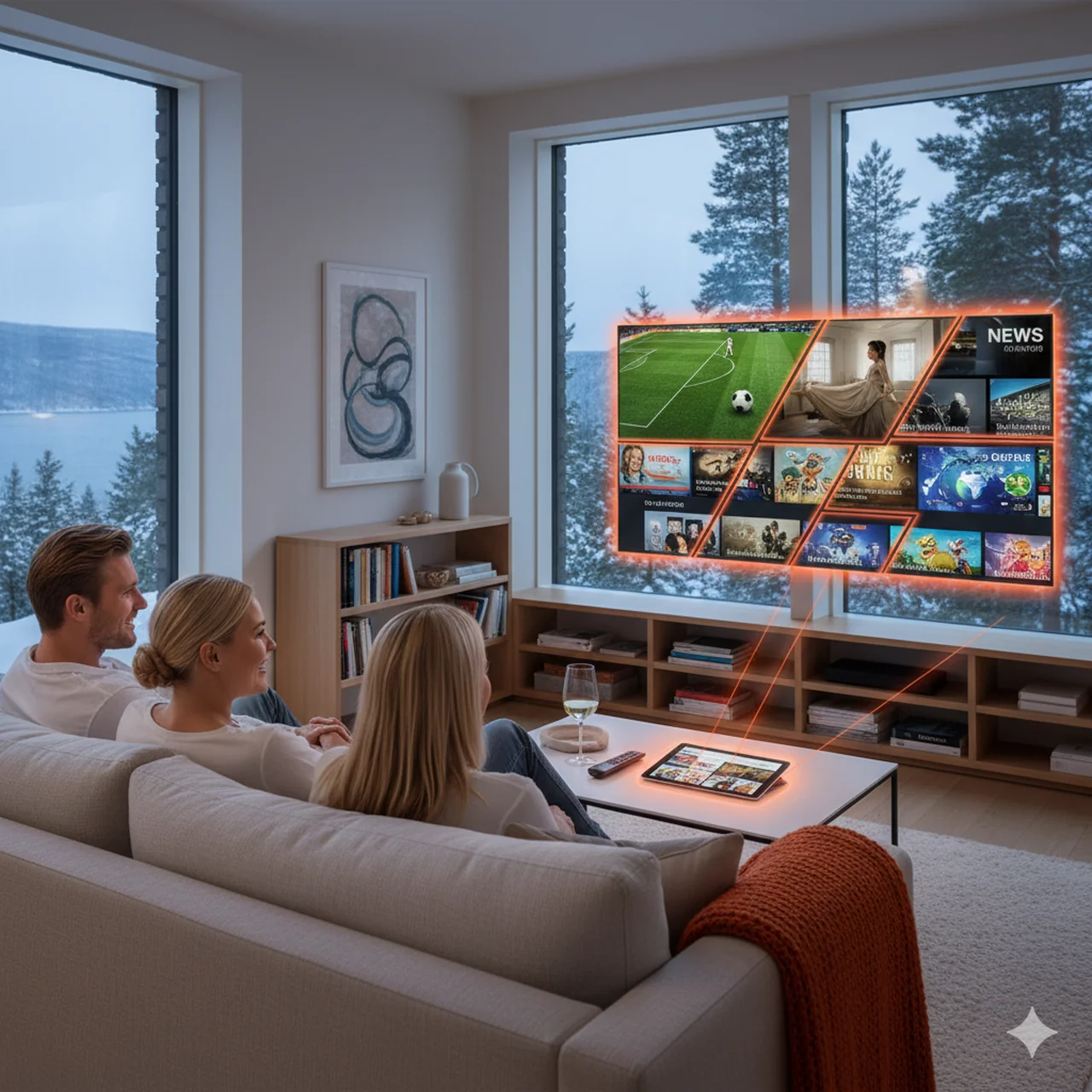
The Technology Behind a Flawless Streaming Experience
Achieving IPTV without buffering is the ultimate goal for any viewer and the hallmark of a premium service. Constant freezing and stuttering ruins the viewing experience, but it is not inevitable. The solution lies in a two-part equation: a technically superior IPTV provider and an optimized user-side setup. Most buffering issues stem from provider-side server overload or network latency. Vornic360 IPTV directly solves this with our proprietary Anti-Freeze technology and a global CDN infrastructure. This guide explains the core technologies that eliminate buffering and provides a checklist to ensure your own setup is perfectly configured for smooth, high-definition streaming.
The Provider's Role: Core Technology for Buffer-Free IPTV
The vast majority of buffering problems originate with the IPTV provider's infrastructure. Vornic360 has invested heavily in a multi-faceted technology stack to deliver IPTV without buffering. The cornerstone is our Proprietary Anti-Freeze Technology. This is an advanced, automated load-balancing system. During peak traffic events, like a championship sports match, our system intelligently reroutes stream requests from congested server nodes to other, less-burdened nodes in real-time. This prevents the server overload that causes freezing on inferior services. This is supported by our global Content Delivery Network (CDN), with cloud edge nodes in North America, Europe, and Asia. By serving content from a server physically closer to the user, we dramatically reduce network latency and jitter—two primary causes of buffering. Finally, we utilize H.265 (HEVC) video compression and adaptive bitrate streaming. HEVC delivers pristine 4K quality at a lower bandwidth, while adaptive bitrate automatically adjusts the stream to match the viewer's real-time internet speed, preventing freezes on slower connections.

Your Role: A User-Side Checklist for Smooth Streaming
While your provider does the heavy lifting, optimizing your local environment is crucial for a perfect stream. Follow this checklist to eliminate user-side bottlenecks.
1. Use a Wired Ethernet Connection: Wi-Fi signals are prone to interference and speed fluctuations. A direct Ethernet cable from your router to your streaming device provides the most stable and fastest possible connection. If Wi-Fi is unavoidable, use the 5GHz band, which is faster and less congested than the 2.4GHz band.
2. Verify Your Internet Speed: For stable HD streaming, a consistent speed of at least 25 Mbps is recommended. For 4K UHD content, aim for 50 Mbps or higher.
3. Use a High-Quality VPN: Many Internet Service Providers (ISPs) engage in 'throttling,' where they intentionally slow down video streaming traffic. A premium, high-speed VPN encrypts your traffic, hiding it from your ISP and bypassing throttling. Vornic360's servers are fully VPN-compatible.
4. Invest in a Powerful Device: The processor in a modern dedicated streaming device (like a NVIDIA Shield, Formuler, or Amazon Firestick 4K Max) is far more capable of decoding high-bitrate streams than the chips in older Smart TVs.
The Vornic360 Guarantee: A Service Built to Be Buffer-Free

Ultimately, the quest for IPTV without buffering leads to choosing a provider engineered for performance. Vornic360 contractually guarantees this with our 99.9% Uptime SLA. This isn't just a marketing claim; it's a promise of reliability backed by our massive investment in a redundant cloud architecture and Tier-4 data centers. Our Network Operations Center (NOC), based in San Jose, California, provides 24/7/365 monitoring of all servers and network routes. This team performs proactive maintenance and anticipates potential bottlenecks, often resolving issues before they ever impact a customer's stream. The combination of our advanced Anti-Freeze load balancing, global CDN, and relentless proactive monitoring makes Vornic360 the definitive choice for viewers who demand a smooth, uninterrupted, and high-quality entertainment experience.